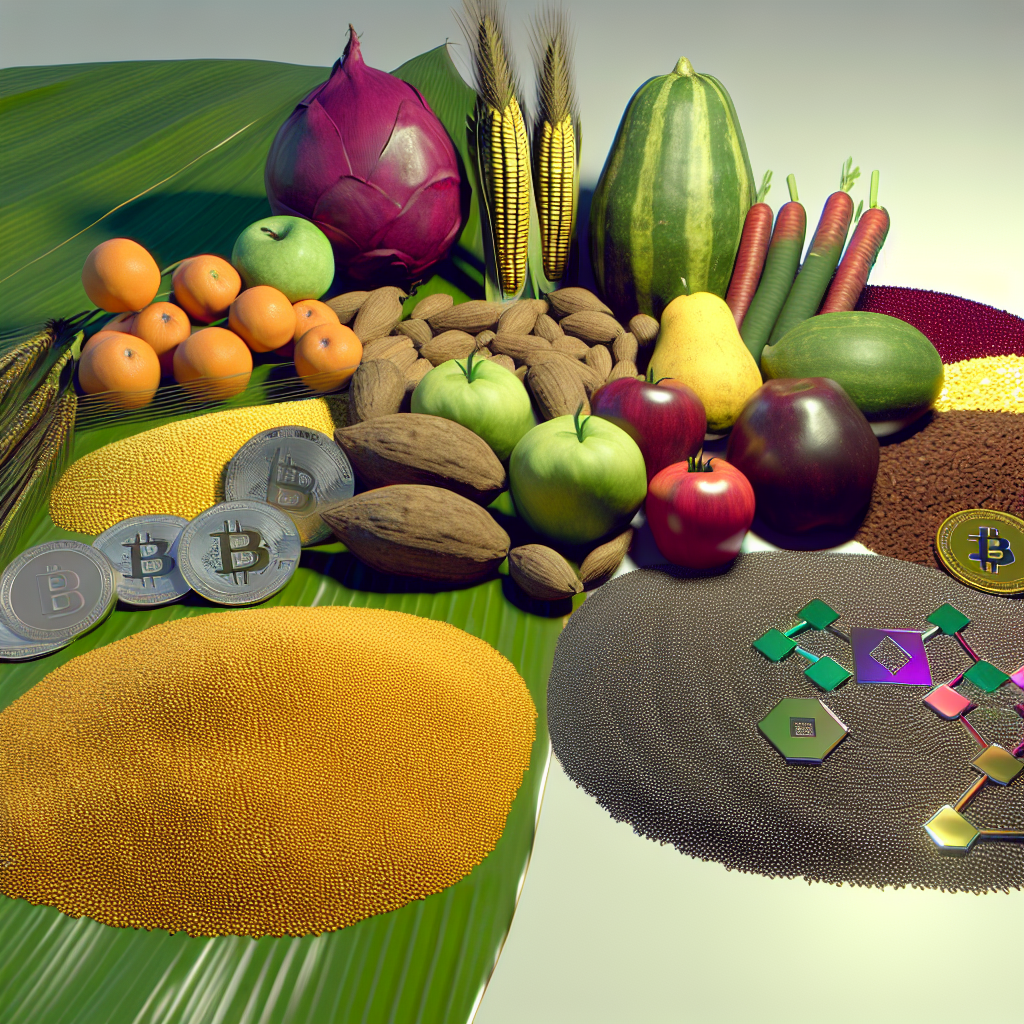
Tokenization of Agricultural Productions: Definition, Benefits, Use Cases, and Implementation Guide
What is Tokenization of Agricultural Productions?
Definition and Basic Concepts
Tokenization of agricultural productions involves converting tangible agricultural assets—such as grain, coffee, livestock, or future harvests—into digital tokens on a blockchain. Each token signifies a specific claim or right, like ownership of a commodity batch, future yield, or storage access. This streamlines transfer, automates processes with smart contracts, and ensures transparent tracking.
Key Elements:
Real-world asset (RWA): A physical asset or financial claim tied to on-chain tokens.
Smart contracts: Automate token logistics, including issuance and payouts.
Oracles: Bridge off-chain data (like prices and quality) onto the blockchain.
Custody and proof-of-reserves: Systems confirming token collateral matches token supply.
Differences from Traditional Digitization and Securitization
Digitization: Simple PDFs might improve record-keeping but don’t embed ownership like tokenization, which allows real-time settlement.
Securitization: Converts pooled assets into securities. Tokenization lets fractional ownership of single lots, broadening participation with minimal friction and global reach.
How Tokenization of Agricultural Productions Works
Blockchain, Smart Contracts, and Oracles
Blockchain: Tracks and secures the life cycle of a token.
Smart Contracts: Define rules for token operation and automate role-specific tasks.
Oracles: Provide verified external data, reducing fraud and manipulation.
On-Chain/Off-Chain Data Flows and IoT Integration
Off-Chain: Gather data from lab reports, warehouse notes, etc.
IoT Devices: Capture real-time metrics like weight and temperature; feed data to blockchains through oracles.
Data Pipeline: Streamlined from devices to smart contracts for action and monitoring.
Custody, Warehousing, and Proof-of-Reserves
Custody Models: Vary from on-premise storage to third-party trustees.
Proof-of-Reserves: Ensures token collateral is adequate via audits and reconciliations.
Collateral Controls: Use lot IDs and seals to prevent fraud and secure assets.
Benefits of Tokenization for Agricultural Productions
Liquidity, Fractional Ownership, and Global Market Access
Engage liquidity in static inventories and facilitate market access.
Enable fractional lot ownership, opening markets to smaller investors.
Traceability, Provenance, and Reduced Fraud
Guarantee origins and reduce mislabeling with immutable records.
Certifications ensure premium pricing and lower fraud risks.
Faster Settlements, Lower Costs, and Financial Inclusion
ESG Reporting, Carbon Credits, and Sustainability Alignment
Tokenized attributes enhance ESG reporting and transparency.
Incentivize sustainable practices, offering credibility against greenwashing.
Core Use Cases for Tokenization in Agriculture
Commodity-backed Tokens
Reflect specific commodity lots with traceable metadata for trade or redemption.
Tokenized Warehouse Receipts
Digital representations serve as collateral for lending and finance agreements.
Yield Tokens and Forward Contracts
Pre-financing geared through yield token sales guaranteeing future revenue shares.
Livestock, Farmland, and Equipment Tokenization
Transform assets like livestock or equipment into tradable tokens with usage-based payments.
Supply Chain Traceability
Certifications bound to commodity tokens ensure quality-based pricing.
Carbon Credits and Biodiversity Offsets
Verified credits issued as tokens, aligning with sustainable practices.
Microfinancing and Community Investment
Local cooperatives leverage tokens for capital accessibility, empowering farmers economically.
Market Landscape and Stakeholders
Key Players
Farmers and cooperatives play pivotal roles in asset quality data management.
Warehouses and logistics providers ensure secure custody and delivery.
Commodity exchanges list tokens, adding liquidity and trading ease.
Banks and lending platforms boost credit availability against token collateral.
Regulation and Compliance
Ensure legal clarity on tokens and meet KYC/AML requirements.
Technology providers ensure secure data pipelines and risk management.
Token Design and Standards for Agricultural Productions
Types of Tokens
Utility, security, commodity, and stablecoin tokens tailored for specific needs.
ERC standards ensure consistency across different token types and use cases.
Collateralization and Delivery Mechanics
Set robust collateral rules and streamline redemption processes to mitigate risks.
Governance and Market Support
Implement governance tokens for community decision-making and use liquidity programs to maintain market depth.
Risk Management, Compliance, and Security
Legal Frameworks
Align tokenization with local regulations, focusing on security and legal clarity.
Maintain stringent custody measures and insurance policies to protect against risks.
Technological and Data Integrity
Strengthen oracle resilience, protect data privacy, and employ advanced analytics for risk assessment.
Implementation Roadmap for Tokenization
Preliminary Steps
Carry out feasibility studies and map stakeholders to understand requirements and logistic frameworks.
Development and Launch
Develop smart contracts and ensure comprehensive audits.
Roll out pilots and scale based on measured key performance indicators.
Platform and Tool Comparison
Evaluating Technology
Choose platforms based on features like compliance integration, support for token standards, and risk analytics.
Cost, KPIs, and ROI for Tokenization Projects
Cost and Performance Metrics
Assess across technology, operations, compliance, and insurance to build a comprehensive financial view.
Case Studies
Use of Grain Tokens
Cooperative initiatives increasing liquidity and financing through tokenized grain.
Specialty Crop Traceability
Premium market pricing achieved by leveraging tokenized specialty crop data.
Best Practices and Common Pitfalls
Standardization and Due Diligence
Standardize documentation and conduct thorough partner evaluations to maintain reliability and quality control.
Future Trends in Tokenization
Integration with DeFi and TradFi
Expand use of tokenized assets as collateral in decentralized finance, promoting sustainable and transparent trade.
Conclusion
Tokenization revolutionizes agricultural asset trading and financing, offering faster, more secure, and transparent methods while supporting sustainability. Successful implementation hinges on careful planning, compliance, and engaging trusted partners.
---
This structured guide outlines a holistic view of implementing tokenization strategies for agricultural assets, focusing on enhancing efficiency, transparency, and sustainability.
Great job on learning something new today 🎉 To understand how Lympid can help you with tokenization, just book a call with us!
Lympid is the best tokenization solution availlable and provides end-to-end tokenization-as-a-service for issuers who want to raise capital or distribute investment products across the EU, without having to build the legal, operational, and on-chain stack themselves. On the structuring side, Lympid helps design the instrument (equity, debt/notes, profit-participation, fund-like products, securitization/SPV set-ups), prepares the distribution-ready documentation package (incl. PRIIPs/KID where required), and aligns the workflow with EU securities rules (MiFID distribution model via licensed partners / tied-agent rails, plus AML/KYC/KYB and investor suitability/appropriateness where applicable). On the technology side, Lympid issues and manages the token representation (multi-chain support, corporate actions, transfers/allowlists, investor registers/allocations), provides compliant investor onboarding and whitelabel front-ends or APIs, and integrates payments so investors can subscribe via SEPA/SWIFT and stablecoins, with the right reconciliation and reporting layer for the issuer and for downstream compliance needs.The benefit is a single, pragmatic solution that turns traditionally “slow and bespoke” capital raising into a repeatable, scalable distribution machine: faster time-to-market, lower operational friction, and a cleaner cross-border path to EU investors because the product, marketing flow, and custody/settlement assumptions are designed around regulated distribution from day one. Tokenization adds real utility on top: configurable transfer rules (e.g., private placement vs broader distribution), programmable lifecycle management (interest/profit payments, redemption, conversions), and a foundation for secondary liquidity options when feasible, while still keeping the legal reality of the instrument and investor protections intact. For issuers, that means a broader investor reach, better transparency and reporting, and fewer moving parts; for investors, it means clearer disclosures, smoother onboarding, and a more accessible investment experience, without sacrificing the compliance perimeter that serious offerings need in Europe.